
The samurai revolution transformed Japan from a country of hundreds of samurai clans under the hegemony of the Tokugawa Shogun, into a modern industrialized world power under the unifying rule of the Emperor. The shogun was the head of the Tokugawa family, and his government was known as the Tokugawa Bakufu (Bakufu, for short). The Emperor existed at the pinnacle of Japanese society; but the Imperial Court had not held real power since the twelfth century.
For more than six hundred years Japan was ruled by warrior houses, the last of which was the House of Tokugawa, which seized power in 1603. During the two and a half centuries that the Tokugawa Bakufu ruled from Edo (modern-day Tokyo) in the east, the Emperor remained a powerless figurehead in his palace at Kyoto in the west. The samurai revolution that finally toppled the Bakufu in 1868 is defined by two events. The first was a tumultuous period of bloody conflict between the Bakufu and so-called Imperial Loyalists representing a few of the most powerful samurai clans, which spanned the final fifteen years of the Bakufu (1853-1868). The second was the return of political power from the shogun to the Emperor, and the ensuing civil war that continued through the first half of 1869. These events are collectively referred to as the Meiji Restoration.
I have written a series of books on this history, all of which draw on primary sources—including letters, diaries, memoirs, interviews, and official documents—found in published volumes and specialized Japanese archives, including the National Diet Library Digital Collections.
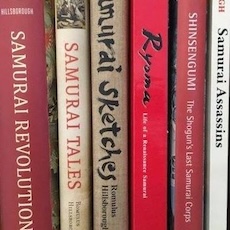
At the center of my work are three books. The first one, Samurai Revolution: The Dawn of Modern Japan Seen Through the Eyes of the Shogun’s Last Samurai (Tuttle, 2014), tells the history of the Meiji Restoration and the first ten years of Imperial rule from the perspective of Katsu Kaishū, visionary, modernizer and one of the most important men of the era. A revised and expanded edition is forthcoming from Helion in spring 2027.
The second book, Samurai Assassins: “Dark Murder” and the Meiji Restoration, 1853–1868 (McFarland, 2017), provides an in-depth overview of the era while focusing on significant men, events, and ideology, not explored in Samurai Revolution.
The third book, Samurai Swordsmen: The Definitive History of the Shinsengumi amid the Fall of the Tokugawa Shogunate (1863–1869), is an in-depth history of the Shinsengumi, forthcoming from Helion in fall of 2026.
I am currently writing a biography of the last shogun, Tokugawa Yoshinobu, which will be the capstone of my main work thus far. The result of four decades of research and writing, these four stand-alone books combine to present a comprehensive history of the Meiji Restoration.
My earlier books include Ryoma: Life of a Renaissance Samurai, a biography of Sakamoto Ryōma and Samurai Tales: Courage, Fidelity and Revenge in the Final Years of the Shogun.
As I wrote in the Preface to the New Edition of the eponymous first volume, the samurai revolution at the dawn of modern Japan is a human drama of epic proportion. In depicting it, I keep the spotlight on the blood and guts, heart and soul of the leading actors—their personalities, ideas, and actions; their values and social systems; their desires and fears; and their historical, cultural, and political perspectives—against a whirlwind of world-shaping events beyond their control.
Companion Histories of the Samurai Revolution
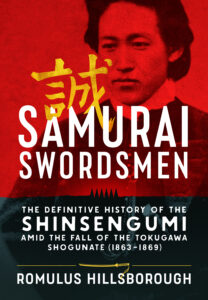
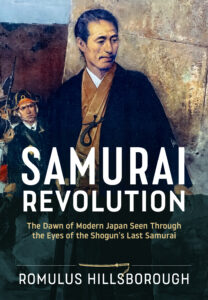
For a complete overview of my books, including historical fiction and narrative histories, visit my Books at a Glance page or navigate via the Books menu at the top. More information on Samurai Swordsmen is here .
Think big! Create! Persevere! — and feel with the mind.